All Categories
Featured
Table of Contents
Recently, the expression development marketing immediately conjured images of seed-stage business packed into co-working areas, driven by caffeine, code, and the unrelenting pursuit of product-market fit. Development was scrappy. It was speculative. It was the domain of founders and early staff members using six hats, shipping tests at midnight, and chasing after any lever that could keep the company alive for another quarter.
Today, it's mid-market brands that are embracing growth marketing for scaling. The old marketing playbooks aren't providing like they used to.
They have more information than start-ups, more agility than business, and more pressure than ever to grow efficiently. And development marketing techniques provide exactly what they need: flexibility, experimentation, and a strenuous, data-backed operating system for scaling smarter. Growth marketing has constantly been misconstrued. It's frequently mistaken as a play ground of A/B test this, modify that, attempt everything, hope something sticks.
At its core, B2B development marketing is a full-funnel, cross-functional approach to earnings creation. It doesn't stop at acquisition or obsess over MQL counts. It spans the whole buyer and customer lifecycle of activation, adoption, expansion, and retention with experimentation built into every stage. It aligns sales, marketing, item, and customer success around shared truths: revenue over vanity metrics, insights over assumptions, and rapid model over rigid campaign calendars.
Navigating UK Mid-Cap Growth Models in 2026
They're seeing what actually works. They're operationalizing those learnings. And they're developing repeatable movements that scale. It's not growth for growth's sake, it's development with intent. Which's precisely what mid-market companies require most right now. Over the previous couple of years, mid-market business have actually found themselves at an inflection point.
Budget restraints have required teams to scrutinize every dollar. Development marketing is constructed for specifically that concern.
Mid-market teams are recognizing that optimizing acquisition alone won't solve the efficiency space. In classification after category, mid-market brands are finding themselves drowned out by enterprise giants with bigger budgets and startups with louder voices.

Growth marketing brings the experimentation mindset that assists teams discover new angles, new stories, brand-new channels, and brand-new methods to differentiate. Tools that once required business budget plans are now accessible to mid-market groups, with AI reducing the barrier even further.
The facilities is lastly in place, making development both possible and scalable. When mid-market groups adopt growth marketing, they rapidly find that it's an operating system, and not a set of strategies.
Future UK Industry Trends for 2026
With that structure in place, B2B development marketing groups take full ownership of the funnel, taking a look at acquisition, activation, adoption, expansion, and retention as one interconnected system rather of different departmental KPIs. This alone changes how teams believe about revenue. Suddenly, onboarding becomes as important as lead generation. Growth becomes predictable rather of unexpected.
And, crucially, everything is recorded, learnings compound, wins become playbooks, playbooks end up being processes, and procedures end up being predictable growth. Development marketing forces marketing, sales, item, and CS to run as a single income engine.
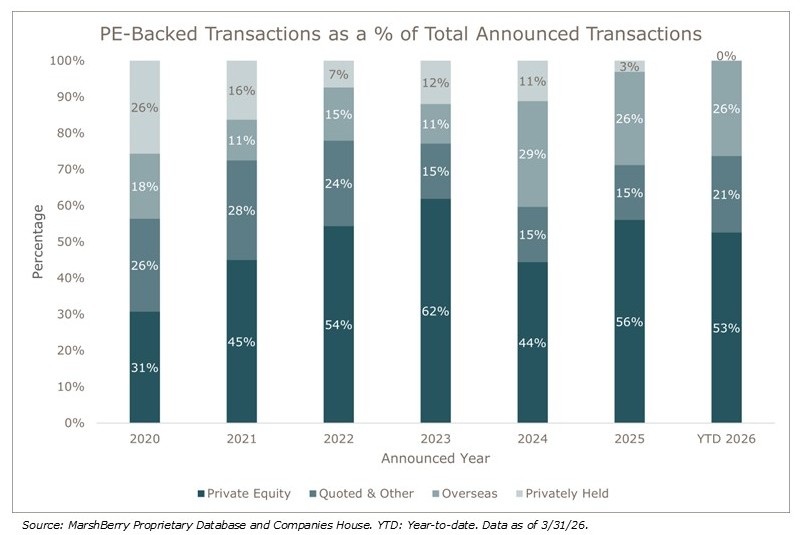
Development sprints unify everyone around shared objectives and shared information. Throughout the business we support, a clear set of high-impact, scalable development plays keeps emerging.
They're changing spray-and-pray content with always-on material engines that atomize a single strong concept into lots of useful formats. Lifecycle optimization is ending up being a tactical top priority. Mid-market groups are tightening onboarding, enhancing trial conversions, and building growth triggers that turn consumers into long-term revenue factors. ABM, as soon as a heavy enterprise motion, is merging with growth concepts, resulting in lean, signal-based programs that deliver personalization without complexity.

Latest Posts
Top Business Success Tips for UK Firms
Predicting a Future UK Economic Outlook and Trade
Investment Banking Outlook for British Mid-Market Firms